## Sửa Chữa “Cấp Cứu” Tivi Samsung: Từ Cháy Fuse Đến Màn Hình Đen Tuyệt Vời!
Một kỹ thuật viên quen thuộc chuyên sửa chữa đồ gia dụng mang đến một mạch điều khiển của chiếc Tivi Samsung, báo rằng cầu chì liên tục bị cháy và anh ấy không tìm ra nguyên nhân. Dưới đây là hình ảnh của mạch:
[Hình ảnh mạch điều khiển]Tôi gỡ bỏ lớp keo phủ trên phần chuyển mạch điện áp cao ở phía sơ cấp.
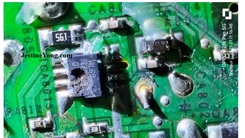
Sau đó, phát hiện một tụ điện 331K 1KV bị nổ:
[Hình ảnh tụ điện bị nổ]Sự cố thực sự là do tụ điện này bị rò rỉ, cuối cùng bị nổ nhưng bị che khuất dưới lớp phủ. Tôi thay thế tụ điện này và cầu chì 3.15A, tiến hành kiểm tra vòng mạch và quét sơ cấp và thứ cấp để tìm các linh kiện bị ngắn mạch nhưng không tìm thấy gì. Vì vậy, tôi cấp nguồn qua một bóng đèn nối tiếp và thấy mạch hoạt động rất tốt với tất cả các điện áp đầu ra 5V, 3.3V, 12V, 32V và 90V (đèn nền LED):
Anh ta lấy mạch từ tôi và sau đó báo cáo rằng không có hình ảnh hiển thị và chỉ thấy màn hình màu xanh đậm, lúc đó tôi khuyên anh ta nên làm sạch cáp LVDS và lắp lại. Nhưng anh ta báo cáo rằng vẫn không có hình ảnh. Sau đó, tôi bảo anh ấy mang Tivi về. Vì tất cả các điện áp đều ổn định, tôi kiểm tra điện áp trên mạch scaler, hình ảnh được chia sẻ bên dưới cho những ai quan tâm:
[Hình ảnh mạch scaler]IC SM4186 có điện áp 12V, 3.3V và 1.8V ở các chân phù hợp, cho thấy sự cố nằm ở phía màn hình.
Sau khi tham khảo ý kiến bạn bè kỹ thuật, tôi được khuyên nên kiểm tra điện trở giữa bốn đường tín hiệu CKV:
Từ trái sang phải, chúng ta gọi chúng là đường 1, 2, 3 và 4. Những đường này xuất phát từ các đường dữ liệu qua các tụ điện. Tôi được yêu cầu kiểm tra điện trở giữa 1 & 3 và 2 & 4. Khi tôi kiểm tra, nó hiển thị khoảng 4,06 Meg. Bước tiếp theo là so sánh điện trở giữa các đường tín hiệu tương tự đi từ phía bên trái của COF. Khi tôi kiểm tra, chúng nằm trong khoảng 4,7 Meg Ohm. Sau đó, tôi được khuyên nên cắt bốn đường tín hiệu ở phía đi đến màn hình và xem xét. Tôi dùng một lưỡi dao sắc bén và kính lúp mạnh để cắt bốn đường tín hiệu đi đến màn hình càng gần COF càng tốt nhưng vẫn chừa một phần mỏng để nối lại nếu cần. May mắn thay, màn hình sáng lên ngay khi tôi cắt bốn đường tín hiệu đó!
[Hình ảnh cắt đường tín hiệu]Bước tiếp theo là nối lại bốn đường tín hiệu đã bị cắt đi đến màn hình. Tôi đã làm được điều đó. Tất cả những điều này dễ nói, nhưng tốn rất nhiều thời gian vào độ chính xác và sự phức tạp. Dưới đây là hình ảnh về công việc đã hoàn thành:
[Hình ảnh nối lại đường tín hiệu]Tôi quên không đề cập đến một điểm quan trọng: Phía cần chọn để cắt là phía có điện trở nhỏ hơn. Tôi để Tivi bật trong vài giờ và nhận thấy nó hoạt động rất tốt. Tôi giữ Tivi lại để thử nghiệm trong một buổi sáng nữa và thấy nó hoạt động rất tốt.
Tivi là một Smart TV và màn hình bật ra một thiết bị âm thanh lớn, khi chọn phát nhạc từ USB. Tôi đã xem những phát triển công nghệ mới nhất với sự kinh ngạc và thích thú. Dù sao thì nhiệm vụ cũng đã hoàn thành với sự hài lòng được thêm vào. Kỹ thuật viên đến lấy Tivi vào ngày hôm sau và thanh toán phí của tôi.
Bài viết này được biên soạn bởi Parasuraman Subramanian từ Ấn Độ. Ông 74 tuổi và có hơn 30 năm kinh nghiệm xử lý thiết bị cổ điển như Radio đèn, Ampli, Máy ghi âm băng cuộn và hiện đang theo học các lớp học công nghệ mới nhất do Hiệp hội Kỹ thuật viên Điện tử Bang Kerala tổ chức. Ông tốt nghiệp cử nhân Quản trị Kinh doanh (BBA), có bằng kỹ sư Radio (tự học) và đã nghỉ hưu với chức vụ Giám đốc điều hành (MD) của một công ty Hoa Kỳ. Hiện đang làm cố vấn cho bệnh viện và các tổ chức khác.
Vui lòng ủng hộ bằng cách nhấp vào các nút mạng xã hội bên dưới. Phản hồi của bạn về bài viết được chào đón. Vui lòng để lại bình luận của bạn.
Ghi chú: Nếu bạn thích đọc bài này, hãy nhấp vào đây để đăng ký blog của tôi (miễn phí). Bằng cách đó, bạn sẽ không bao giờ bỏ lỡ bài đăng nào. Bạn cũng có thể chuyển tiếp liên kết trang web này cho bạn bè và đồng nghiệp của mình – cảm ơn!
Bạn có thể xem bài viết trước đó của ông về vấn đề màn hình trắng gián đoạn được giải quyết trong Tivi LED SONY Model KDL-43W800D
Thích (1) Không thích (0)
Giá cả dịch vụ: (Cần thêm thông tin chi tiết về giá cả để cập nhật phần này)
#SửaChữaTiviSamsung #MànHìnhĐen #CầuChìCháy #Bypass #ĐiệnTử #KỹThuậtĐiệnTử #SửaChữaĐiệnTử #ThủThuậtSửaChữa #HọcSửaChữa #TiviLED #SamsungUA32T4450AKLXL
Hãy viết bài báo dài đầy đủ chuyên nghiệp hay bằng tiếng VIệt kèm hashtag Bypass Surgery Done In SAMSUNG LED TV Model UA32T4450AKLXL

A known and regular technician who focuses on house old appliances brought the compo board of this Samsung TV stating that the fuse was blowing and he could not find out the reasons for it. Following is the picture of the board:
I removed all the glue coated on top of the high voltage switching section of the primary side.
Then found a 331K 1KV capacitor burst:
The real fault was this leaky capacitor which finally blew but remained obscure under the coating. I replaced this capacitor and the fuse of 3.15A, did a ring testing and combed the primary and secondary sides for any shorted components and did not find any. So applied power through a series bulb and found the board working very well with all the output voltages of 5V, 3.3V, 12V, 32V and 90V (LED backlight):
He collected the board from me and later reported that there was no display and only dark blue screen was seen, upon which I advised him to clean the LVDS cable and reinsert it. But he reported that still there was no display. Then I told him to bring the TV home. As all voltages were steady, I checked the voltages on the scaler board, pictures of which are shared below for those who might have interest:
The SM4186 was having the 12V, 3.3V and 1.8V at the appropriate pins indicating that the problem was in the panel side.
After consultation with my techie friends, I was advised to check the ohms between the four CKV lines:
From left to right, let us call them track 1, 2, 3 and 4. These tracks come out of the date lines through caps. I was asked to check resistance between 1 & 3 and 2 & 4. When I checked these, it was showing around 4.06 Meg. The next step was to compare the ohms between the same tracks that go from the left side of the COF also. When I checked these, they were in the order of 4.7 Meg Ohms range. I was then advised to cut the four tracks of the side that go to the panel and see. I took a sharp blade and used powerful lens to cut the four tracks that go to the panel as close to the COF as possible but leaving a thin margin to rejoin if necessary. Luckily, the display came on as soon as I cut the four tracks!
Then the next step was to join all the four tracks going to the panel that were cut. I managed to do that also. All these are easy to say, but took precious time on precision and intricacy involved. Following is the picture of the work done:
I forgot to mention an important point: The side to be selected for cutting is the one which showed lesser ohms. I left the TV on for several hours and noticed that it was working very well. I kept the TV with me for a morning trial too and found it was working very well.
The TV was a smart TV and the display turned out to be a big audio equipment, upon selecting music to be played from a USB. I was watching the latest developments in technology with awe and amusement. Anyhow, mission accomplished with satisfaction getting added to the bag. The technician collected the TV next day and paid my charges.
This article was prepared for you by Parasuraman Subramanian from India. He is 74 years old and has more than 30 years’ experience in handling antique equipment like Valve Radio, Amps, Reel Tape Recorders and currently studying latest tech-classes conducted by Kerala State Electronics Technicians’ Association. He has done graduation in BBA degree, private diploma in Radio Engineering and retired as MD of a USA company. Presently working as Consultant to Hospital and other institutions.
Please give a support by clicking on the social buttons below. Your feedback on the post is welcome. Please leave it in the comments.
P.S-If you enjoyed reading this, click here to subscribe to my blog (free subscription). That way, you’ll never miss a post. You can also forward this website link to your friends and colleagues-thanks!
You may check on his previous article on
Likes (1)Dislikes
 (0)
(0)
//
(tiêu đề viết lên đầu)
Bypass Surgery Done In SAMSUNG LED TV Model UA32T4450AKLXL
A known and regular technician who focuses on house old appliances brought the compo board of this Samsung TV stating that the fuse was blowing and he could not find out the reasons for it. Following is the picture of the board:
I removed all the glue coated on top of the high voltage switching section of the primary side.
Then found a 331K 1KV capacitor burst:
The real fault was this leaky capacitor which finally blew but remained obscure under the coating. I replaced this capacitor and the fuse of 3.15A, did a ring testing and combed the primary and secondary sides for any shorted components and did not find any. So applied power through a series bulb and found the board working very well with all the output voltages of 5V, 3.3V, 12V, 32V and 90V (LED backlight):
He collected the board from me and later reported that there was no display and only dark blue screen was seen, upon which I advised him to clean the LVDS cable and reinsert it. But he reported that still there was no display. Then I told him to bring the TV home. As all voltages were steady, I checked the voltages on the scaler board, pictures of which are shared below for those who might have interest:
The SM4186 was having the 12V, 3.3V and 1.8V at the appropriate pins indicating that the problem was in the panel side.
After consultation with my techie friends, I was advised to check the ohms between the four CKV lines:
From left to right, let us call them track 1, 2, 3 and 4. These tracks come out of the date lines through caps. I was asked to check resistance between 1 & 3 and 2 & 4. When I checked these, it was showing around 4.06 Meg. The next step was to compare the ohms between the same tracks that go from the left side of the COF also. When I checked these, they were in the order of 4.7 Meg Ohms range. I was then advised to cut the four tracks of the side that go to the panel and see. I took a sharp blade and used powerful lens to cut the four tracks that go to the panel as close to the COF as possible but leaving a thin margin to rejoin if necessary. Luckily, the display came on as soon as I cut the four tracks!
Then the next step was to join all the four tracks going to the panel that were cut. I managed to do that also. All these are easy to say, but took precious time on precision and intricacy involved. Following is the picture of the work done:
I forgot to mention an important point: The side to be selected for cutting is the one which showed lesser ohms. I left the TV on for several hours and noticed that it was working very well. I kept the TV with me for a morning trial too and found it was working very well.
The TV was a smart TV and the display turned out to be a big audio equipment, upon selecting music to be played from a USB. I was watching the latest developments in technology with awe and amusement. Anyhow, mission accomplished with satisfaction getting added to the bag. The technician collected the TV next day and paid my charges.
This article was prepared for you by Parasuraman Subramanian from India. He is 74 years old and has more than 30 years’ experience in handling antique equipment like Valve Radio, Amps, Reel Tape Recorders and currently studying latest tech-classes conducted by Kerala State Electronics Technicians’ Association. He has done graduation in BBA degree, private diploma in Radio Engineering and retired as MD of a USA company. Presently working as Consultant to Hospital and other institutions.
Please give a support by clicking on the social buttons below. Your feedback on the post is welcome. Please leave it in the comments.
P.S-If you enjoyed reading this, click here to subscribe to my blog (free subscription). That way, you’ll never miss a post. You can also forward this website link to your friends and colleagues-thanks!
You may check on his previous article on
Likes(1)Dislikes(0)
//
[su_box title=”Liên hệ đặt mua sản phẩm tại bài viết tại Viễn Đông Mobile” style=”default” box_color=”#3be863″ title_color=”#FFFFFF” radius=”3″]
Viễn Đông Mobile là cửa hàng chuyên kinh doanh các sản phẩm điện tử phục vụ nhu cầu chơi game, bao gồm:
- Gaming phone: Điện thoại cấu hình mạnh, tối ưu cho việc chơi game.
- Máy tính bảng chuyên gaming: Màn hình lớn, hiệu năng cao, trải nghiệm game tốt hơn.
- Phụ kiện cao cấp: Tai nghe, bàn phím, chuột,… hỗ trợ game thủ.
Thông tin liên hệ:
- Địa chỉ: 211 đường 3/2, phường 11, quận 10, TP.HCM
- Điện thoại: 0777600020
- Email: contact@viendongmobile.com

Bản đồ chỉ đường
[su_gmap address=”211 đường 3/2 phường 11 quận 10 Tp hồ chí minh Việt Nam” responsive=”yes”] xin chào Xem chi tiết và đăng ký[featured_image]